Remembering Professor Pamela Howard OBE
It is with enormous sadness that we share the news of the passing of our fellow trustee and dear friend, Professor Pamela Howard OBE.
October 28, 2026
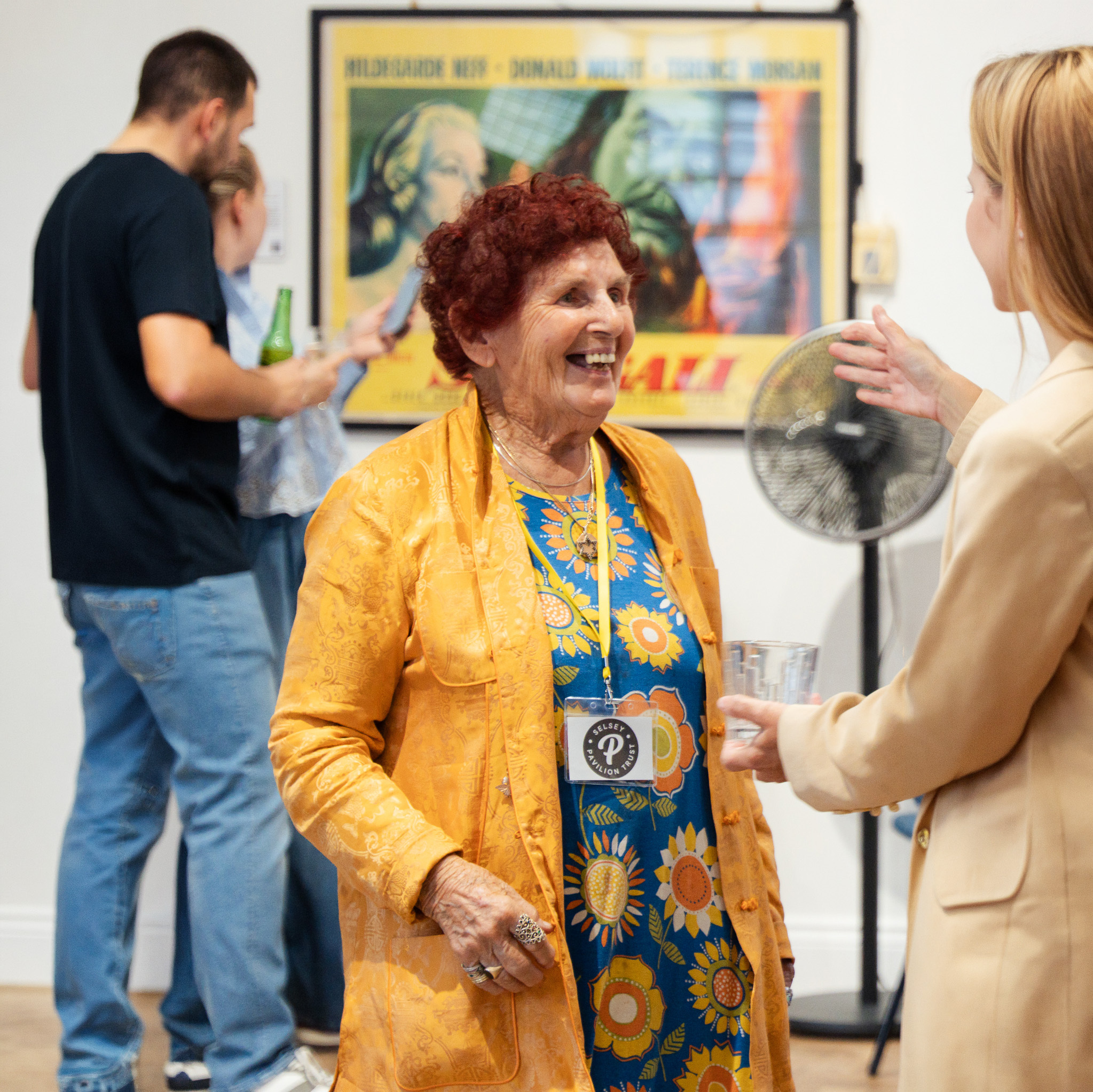
Pamela was an extraordinary woman, whose remarkable life and career took her to theatres and opera houses across the world. A highly respected scenographer, director, artist and educator, she inspired generations of theatre practitioners and continued working right up until the very end. She had only just returned home from Romania, where she had travelled to receive an honorary doctorate.
But to everyone involved with the Selsey Pavilion, Pamela was so much more than her extraordinary professional achievements. She was one of the people who made the rescue of our building possible.
When Pamela moved to Selsey in 2003, she immediately recognised the significance of the Pavilion and contacted the Theatres Trust to alert them to its existence and circumstances.
It might seem like a relatively small action, but it was one that would have enormous consequences. Her intervention helped set in motion the long journey towards saving the Pavilion, culminating in the Trust finally securing ownership of the building in February 2024.
It is no exaggeration to say that, without Pamela, the Pavilion's story could have been very different.
Bringing the Pavilion back to life
Pamela's involvement went far beyond those early efforts. She was a passionate advocate for the building and its future, bringing a lifetime of theatrical knowledge, experience and creativity to the project.
In 2014, she directed The End of the Journey, a promenade performance written by Gillian Plowman and produced and choreographed by Chris Butler, as part of the commemorations marking the centenary of the First World War.
At the time, the Pavilion was still being used as a builder's yard, but Pamela saw an opportunity to demonstrate its extraordinary potential. She transformed the dusty old building into the battlefields of the Somme, with audiences moving through recreated trenches, surrounded by sandbags, sound effects and all the horrors of war.
The production brought together professional performers, local actors and volunteers, and demonstrated what could be achieved within the Pavilion's walls.
Pamela described the production on her own website as part of her wider ambition to breathe new life into "unloved and forgotten spaces" through art. She affectionately referred to the Pavilion as the "Jewel in the Crown of Selsey town".
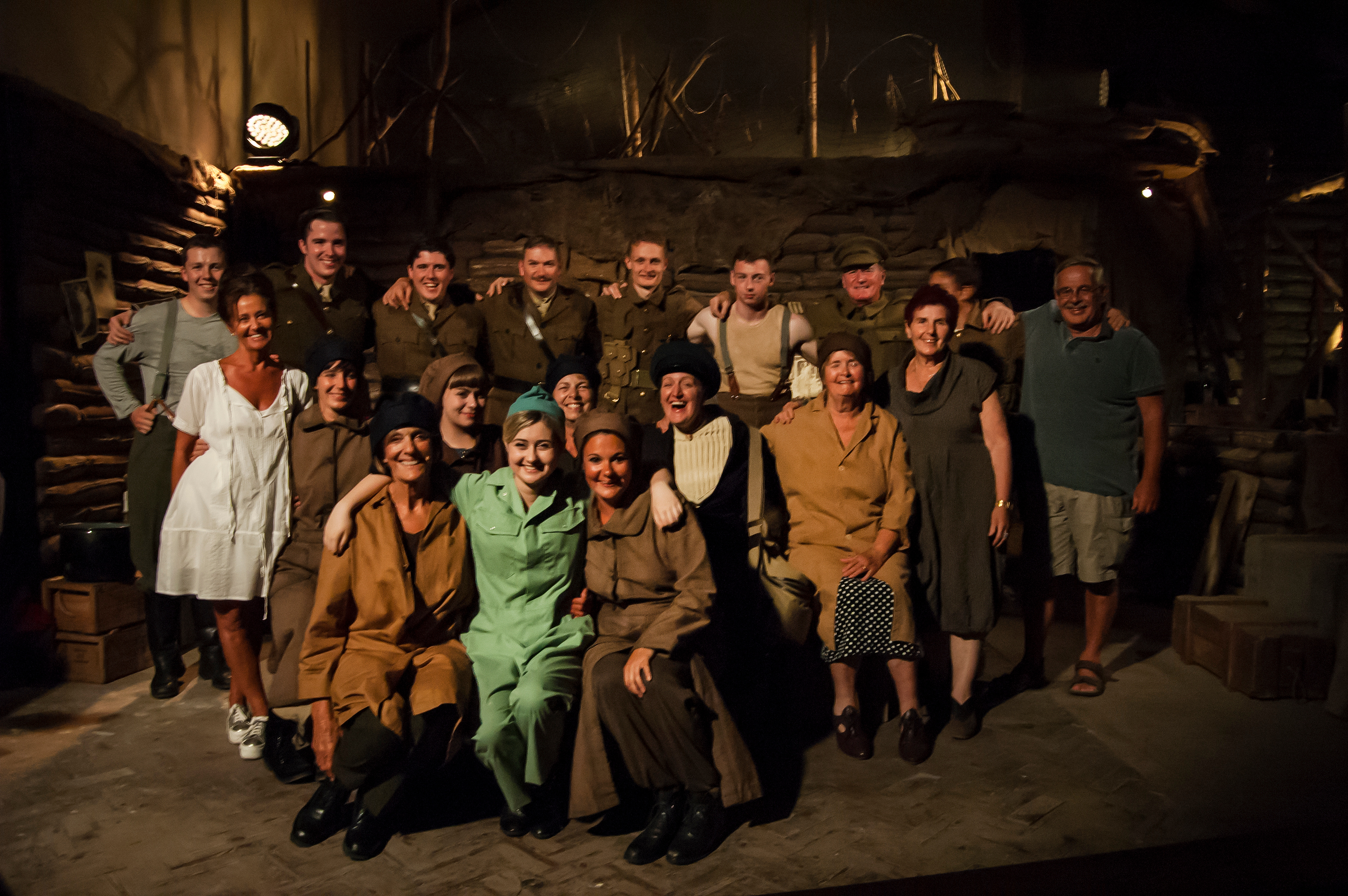
at the Selsey Pavilion in 2014. Photo: Ronnie Hall.
The following year, Pamela returned to the Pavilion with Tonight at the Pavilion… Charlie Chaplin, co-directing alongside Gillian Plowman, with choreography and production by Chris Butler.
Marking a century of Chaplin's Little Tramp, the production combined live performance, music, dance, silent film footage and piano accompaniment. Once again, Pamela and her collaborators demonstrated that the Pavilion was not simply a historic building worth preserving, but a theatre capable of entertaining and moving audiences. The production proved so successful that it subsequently travelled to London's Cinema Museum in 2016.
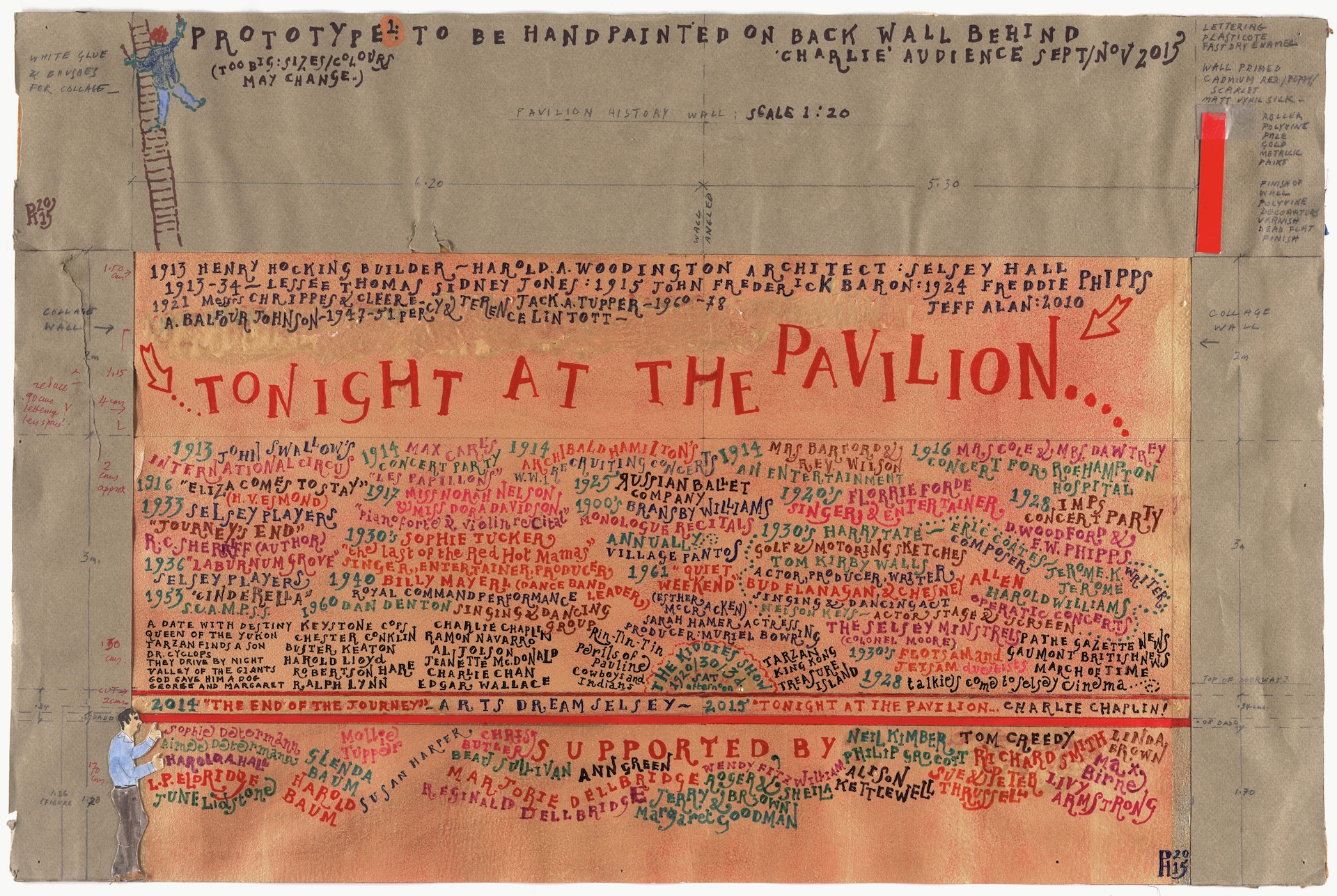
Pamela also designed and hand-painted the Pavilion's History Wall, an educational resource celebrating the many performers who had graced its stage over the decades. It is a wonderful example of her artistic talent and dedication to preserving the stories of the building.
Her belief in the Selsey Pavilion was never simply about restoring bricks and mortar. It was about restoring its purpose, bringing people together through art, performance and creativity.
An extraordinary life in theatre
Pamela's contribution to international theatre was immense. She worked with some of the most celebrated figures and institutions in the profession, taught many of Britain's leading theatre designers and was recognised internationally as a pioneer in her field.
Awarded an OBE for services to drama in 2008, she was also the author of What is Scenography?, an influential book published in seven languages.
Her work ranged from major international opera productions to intimate community performances, and she approached them all with the same remarkable imagination and determination.
Yet, despite everything she achieved, she never stopped looking forward, never stopped creating and never lost her enthusiasm for the work she loved.
Remembering Pamela
Selsey Pavilion Trust Chair, Christian Skelton, shares his personal memories of Pamela:
I will always remember Pamela's extraordinary enthusiasm for the Pavilion. I first met her during The End of the Journey, in which my wife was performing, and immediately felt a kinship with her.
Pamela was a real force of nature. Whether she was designing a production of Pygmalion in Japan or transforming the Pavilion's dusty old hall into the Somme, she threw herself into everything with boundless energy and determination. For The End of the Journey, she somehow managed to recruit volunteers and local schoolchildren to make hundreds of rats for the production, which became infamous amongst the Trust!
I remember during the pandemic, Pamela sent me a link to what she casually described as 'a small exhibition of my work in Beijing'. When I opened it, I was greeted by an enormous 30-foot projection of Pamela on a wall, surrounded by a fully interactive exhibition celebrating her life's work.
That was Pamela all over. So many of her stories seemed far too extraordinary or eccentric to be true, but you quickly learnt that, with Pamela, they invariably were.
She was endlessly creative, wonderfully eccentric and utterly unstoppable. Even in her final days, she was still travelling the world, having recently visited Romania to receive an honorary doctorate. Her passion for theatre and creativity never diminished.
But my lasting memory of Pamela will be an hour we spent together in The Pavilion Studio in July. We sat looking at photographs of the Pavilion, past and present, projected onto the wall, while she recalled stories from the building's history. She reminisced about The End of the Journey and Tonight at the Pavilion: Charlie Chaplin, and shared wonderful memories of Ellis Berg and the unveiling of the Pavilion's blue plaque.
It was a lovely hour, just the two of us, looking back at everything the building had been through and the people who had helped keep its story alive. And then, quite abruptly, Pamela stood up and announced, 'Right, I've got to go!'
That was Pamela all over. Always somewhere to be, something to do and another adventure waiting. She simply never stopped.
I will miss her extraordinary stories, her infectious enthusiasm and, above all, her unwavering belief in the Pavilion and what it could become.
Fellow trustee Rosie Neal remembers Pamela's enthusiasm for incorporating all manner of found materials into her creative work, but also the warmth and humour that accompanied everything she did.
"My lasting memories will be her enthusiasm for her work incorporating different found materials, plus the twinkle in her eye and sense of fun.
She enjoyed a giggle."
Trustee Allen also recalls a particularly memorable first encounter with Pamela:
"When I first met Pamela, she asked if I knew anything about computers. I said yes, and she replied, 'Marry me!' Such was her sense of humour. I will miss her too."
These wonderful memories capture something that those who knew Pamela will recognise immediately. Behind her extraordinary achievements was someone with an infectious sense of fun, a mischievous sense of humour and an ability to make even the most ordinary moments memorable.
A lasting legacy
For all of us continuing the restoration of the Pavilion, Pamela's passing is an enormous loss.
Long before the Trust secured ownership of the building, before the restoration began, and before the prospect of reopening its doors became a reality, Pamela understood why the Pavilion mattered and why it deserved to be saved.
But perhaps what made Pamela so special was that she didn't just believe in what the Pavilion could become. She rolled up her sleeves and showed us.
From transforming the building into the trenches of the Somme to bringing Charlie Chaplin back to its stage, from painstakingly painting its History Wall to sharing stories of its remarkable past, Pamela helped keep the Pavilion's spirit alive during some of its most uncertain years.
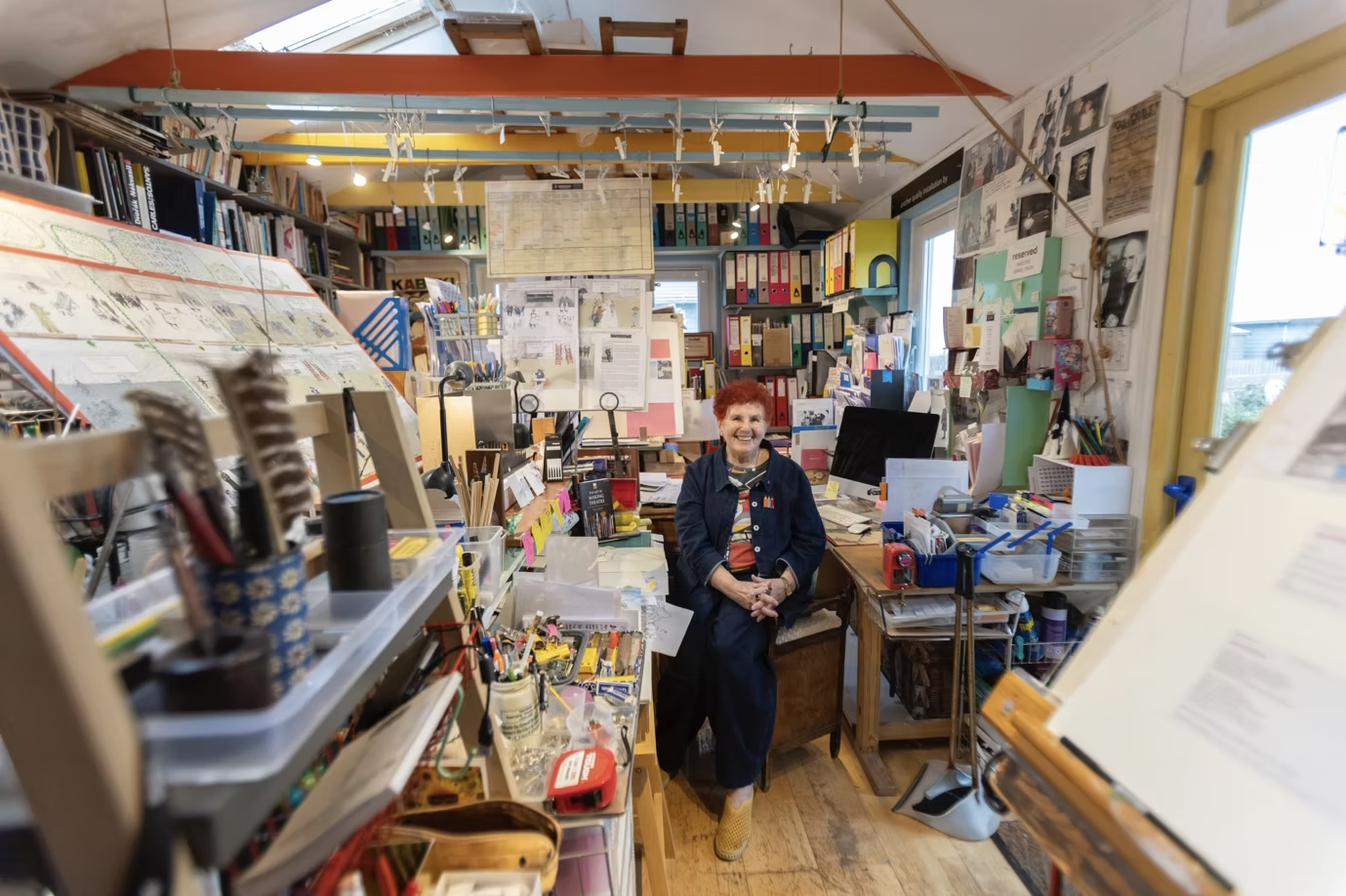
As we continue the work of restoring the Pavilion, we are reminded of just how much we owe to those early efforts, and to Pamela's determination that this special building should have a future.
Her contribution to theatre will rightly be celebrated around the world, but here in Selsey, her legacy will live on in the very building she helped to save.
Our deepest sympathies go to Pamela's family, friends, colleagues and the countless people whose lives she touched throughout her remarkable life.
Thank you, Pamela, for everything you did for the Selsey Pavilion.
We will miss you enormously, and we will never forget what you made possible.
Don't miss a thing – sign up to our newsletter!
Support Us
Please support our efforts with a one-off donation. 100% of the donation goes to the charity. You can choose how much you want to donate, Gift Aid, and remain anonymous. It's a fast, flexible way of supporting our ongoing efforts.
Proudly supported by


Quick Links
Contact us
Join our 'Friends Of' Newsletter


